Water Projects
Find and fund the most effective water projects globally. Filter by tax status, cost-effectiveness, and project type.
Sand Dams in Kenya (UDO - Utooni Development Organization)
Utooni Development builds sand dams with community self-help groups in Machakos/Makueni, Kenya. Dams cost about 100,000 Kenyan Shillings ($1,200) for materials + community labor. Each dam serves hundreds of people, enabling year-round farming and income generation.
[Original Cost: 100,000 KES per dam (about $1,200) (KES)] Very low-cost solution: $1,200 per dam (materials) plus community labor. Dams have transformed areas, with farmers earning $1,200 per 4 months from vegetables.
Water is Basic (Women's Well Repair Initiative)
Trains and equips all-women mechanic cooperatives across South Sudan to repair and maintain broken community boreholes, keeping clean water flowing permanently.
Founded by South Sudanese religious and community leaders. Works directly with the Women's Empowerment Solutions Initiative (WESI). Over 2,900 wells rehabilitated. US 501(c)(3) (EIN 27-4280703).
IDEP Foundation (Bali Water Protection Program)
Constructs gravity-fed rainwater recharge wells in Bali's central volcanic highlands to replenish depleted groundwater tables and halt coastal saltwater intrusion caused by tourism overdraft.
Based in Gianyar, Bali. Works with Politeknik Negeri Bali. Directly restores community village aquifers over-extracted by tourist resorts. Verified 20-year civil engineering structures.
Clean Water for Haiti BioSand Filters
Provides BioSand water filters to Haitian families, removing 98-100% of disease-causing microbes. Filters last 20+ years, serve 8-10 people per household.
[Original Cost: $50 US or more per filter (serves 8-10 people) (USD)] Over 12,000 filters installed since 2001; produces ~200 filters per month. Donation of $50 US or more helps provide filters.
Water By Women (formerly Water With Blessings)
Empowers local mothers as 'Water Women' equipped with Sawyer PointONE filtration kits. Each trained Water Woman purifies clean water for her own household and 3 neighboring families.
[CapEx: $80 USD / deployed Water Woman package (serves 4 families / ~20 people); 10-year lifespan] Note on CapEx: While bare wholesale Sawyer membrane cartridges cost ~$20 in bulk factory purchases, the actual in-country program cost is $80 USD (covering the filter, food-grade bucket assembly, international freight, and in-depth mother training). The 4-family community multiplier ($80 / 20 people) yields $4.00 USD setup cost and $0.40/person/year, assuming sustained daily neighbor sharing.
Dabane Trust (Water Workshops)
Pioneers sub-surface sand abstraction well points and Rowa hand-pumps in the seasonal dry sandy riverbeds of arid Matabeleland, Zimbabwe.
Headquartered in Bulawayo, Zimbabwe. Internationally renowned technical authority on sand bed water extraction. Avoids failed deep borehole drilling by tapping natural sand aquifer filtration.
Evidence Action - Dispensers for Safe Water
Evidence Action installs point-of-collection chlorine dispensers at existing rural water points in Kenya, Uganda, and Malawi. Users treat their water for free at the source by dispensing a calibrated dose of chlorine into their collection containers; the water disinfects during transport home. Community-elected volunteer promoters refill dispensers, monitor usage, and educate neighbors. The program has scaled to reach more than 10 million people annually.
[Original Cost: $0.50 per person per year (USD)] Projected scale cost is only $0.50 per person per year, supported by strong RCT evidence of sustained adoption; however, recent internal reviews indicate actual usage in Kenya may be ~40% lower than originally estimated, prompting partial phase-out.
Ugandan Water Project (Borehole Well Rehabilitation — BHR)
Overhauls broken, abandoned community hand pump boreholes across Uganda, replacing worn cylinders, drop pipes, and pump heads, and establishing trained village water user committees.
Turnkey project cost of $2,000 USD restores high-yield drinking water for 300 to 500 people, saving up to 75% compared to drilling a new well ($8,000–$12,000). Verified through mWater real-time monitoring. 10+ year lifespan.
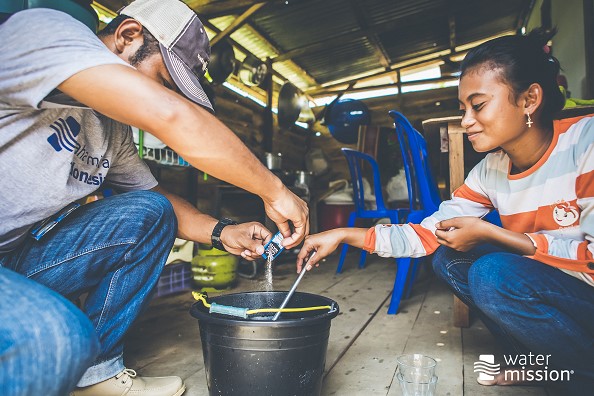
Sand Dam Program in Southern Africa (Excellent Development)
Excellent Development built sand dams across Matobo (Zimbabwe), Tete (Mozambique), and Eswatini. Each dam costs ~£12,434 ($16,164 USD) and serves an average community of ~963 people, providing sustainable year-round water and regional drought resilience.
[Original Cost: £12,434 per dam (~$16,164 USD) serving ~963 people (GBP)] Sand dams in this program cost about £12,434 ($16,164 USD), serving ~963 community members per dam ($16.78/person setup). Over a 30-year engineering lifespan, annualized cost is $0.56/person/year.
Ugandan Water Project (School Rainwater Catchment Package)
Installs heavy-gauge guttering, a 10,000-liter food-grade Crestank, concrete pad, first-flush diverter, lockable brass bibcocks, and point-of-use filtration for rural Ugandan schools.
Delivers safe on-site drinking water for 300 to 500 students and teachers, eliminating daily water-hauling from distant swamps and keeping girls in school. 15-year infrastructure lifespan.
Wine To Water Tanzania (Solar Boreholes & Community Water Kiosks)
Drills deep boreholes equipped with solar submersible pumps, elevated reservoir tanks, transmission pipelines, and community water kiosks across rural Arusha and Rift Valley communities.
Turnkey community water infrastructure (e.g., Oldadai project) providing centralized potable water close to homes and schools. System serves ~800 to 1,200 people with a total CapEx of ~$9,500 USD ($9.50/person setup). Over a 15-year engineering lifespan, annualized cost is $0.63/person/year. Managed by trained local Water User Committees.
The Water Project
Builds wells, sand dams, and rainwater systems in sub-Saharan Africa, focusing on broken well repairs and local partnerships.
Targets underserved areas with sustainable solutions, but scale is limited.
HNCO UK Solar Pump Retrofit (Community Well)
Provides a solar-powered submersible pump upgrade for an existing community well in impoverished rural areas, eliminating manual hand-pumping and increasing daily water yield. Total cost £1,800 serving 200-500 people.
[Original Cost: £1,800 total per solar pump kit (GBP)] Solar pump conversion / retrofit for an existing community borehole serving 200-500 people (~350 midpoint). Setup cost is ~£5.14 per person (~$6.68 USD). Over a 10-year solar panel and DC pump lifespan, annual cost is $0.67/person/year. (Note: covers solar pumping hardware and installation; assumes existing borehole source).
Village Drill Deep Well Drilling (Scout Verification)
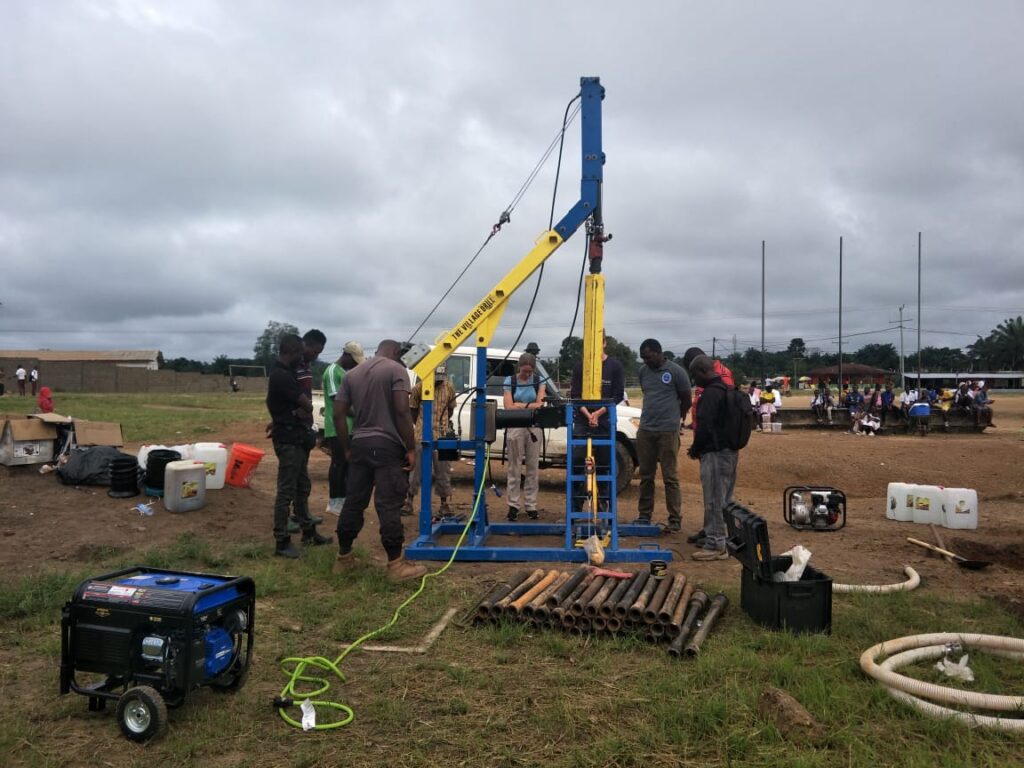
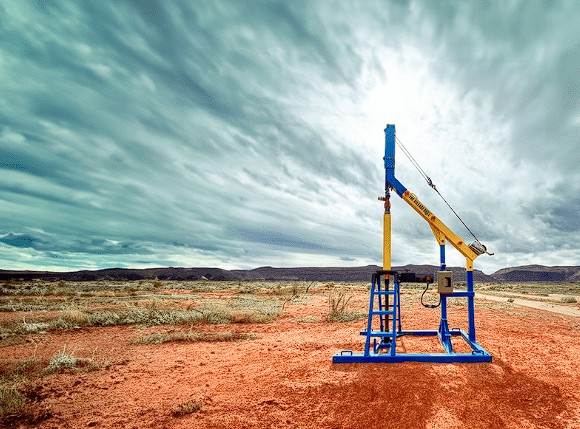
Vetted borehole drilling projects utilizing the physical human-powered Village Drill system to reach clean water aquifers at depths of up to 80 meters without heavy logistics overhead.
[Standardized: $3,500 USD CapEx / 350 people benchmark per Sphere standard; 15-year lifespan] High-efficiency human-powered hybrid rig eliminates $2,000–$4,000 heavy truck mobilization. Standardized from promotional 1,000-person village claims to physical 350-person single handpump hydraulic capacity (15 L/min). Annualized cost: $0.67/person/year.
WHOlives Village Drill Well - Eastern Uganda
Clean water borehole in Sironko District, Eastern Uganda. Taps highly protected groundwater tables using a portable Village Drill, serving 140 families (~700 people). Co-funded by the local community to create micro-entrepreneur maintenance jobs and ensure hardware lifespan.
[Standardized: $3,500 USD CapEx / 350 people benchmark per Sphere standard; 15-year lifespan] Low-cost human-powered borehole drilling. Standardized from localized 650–700-person density logs to 350-person sustainable handpump hydraulic capacity. Annualized cost: $0.67/person/year.
WHOlives Village Drill Well - Western Kenya
A community-supported deep borehole well in Western Kenya using the manual hybrid Village Drill system to access deep aquifers. Serves 160 families (~800 people) with continuous, safe water, eliminating FGM risks and biological waterborne pathogens. Managed by local village water committee.
[Standardized: $3,500 USD CapEx / 350 people benchmark per Sphere standard; 15-year lifespan] Low-cost human-powered borehole drilling. Standardized from localized 650–700-person density logs to 350-person sustainable handpump hydraulic capacity. Annualized cost: $0.67/person/year.
WHOlives Village Drill Well - Dodoma Tanzania
Arid-zone deep well in Dodoma, Tanzania, drilled using the low-logistics Village Drill system. Provides water to 180 families (~900 people) who contribute small monthly payments to maintain the system, bypassing regular handpump breakdown problems.
[Standardized: $3,500 USD CapEx / 350 people benchmark per Sphere standard; 15-year lifespan] Low-cost human-powered borehole drilling. Standardized from localized 650–700-person density logs to 350-person sustainable handpump hydraulic capacity. Annualized cost: $0.67/person/year.
Ugandan Water Project (The DROP Filter Household Program)
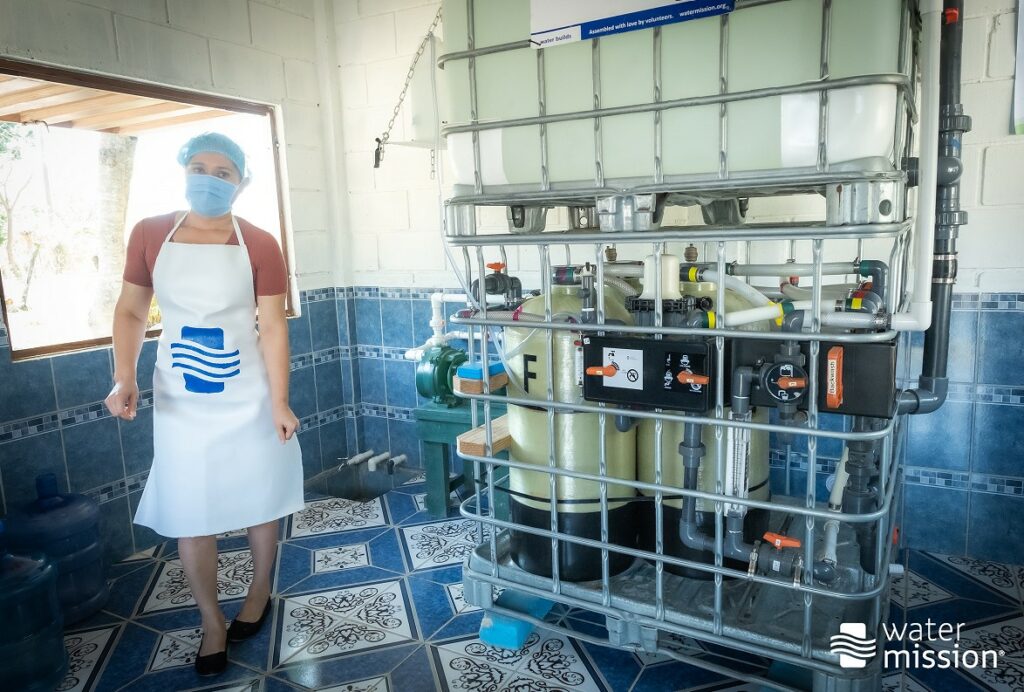
Distributes 0.1-micron DROP hollow-fiber membrane filters fitted directly to 20-liter sealed jerrycans for rural homes and schools across Uganda, preventing recontamination.
Maintains in-country warehouse inventory in Nansana, Kampala. Jerrycan mounting eliminates broken bucket spigots and open dipping cups. Subsidized humanitarian rate of $40 USD / kit. Tax-exempt 501(c)(3) in the USA.
Wine To Water (The DROP Filter® Global Household Program)
Wine To Water's proprietary 0.1-micron hollow-fiber membrane filter with patent-pending protective fins and universal 28mm bottle/jerrycan threads, deployed directly to vulnerable families and schools worldwide.
Engineered by WTW in Boone, NC. 24+ GPH gravity flow rate. Backwashable membrane with lifetime durability (~10-year realistic field life). Subsidized non-profit distribution at $40 USD / kit serving an average household of 6 people ($6.67/person setup; $0.67/person/year). Tax-deductible 501(c)(3) in USA.
Malawi Water Project BioSand Filters
Provides household biosand water filters to families in Malawi, made from concrete, lasting 35+ years. $150 provides one filter for a family.
[Original Cost: $150 per filter (USD)] Filters are based on technology developed by Dr. David Manz. Affordable long-term solution for vulnerable families.
Sawyer PointONE Household Filtration (Scout Verification)
Distribution of 0.1-micron hollow-fiber membrane point-of-use gravity filtration kits to remote households in rural areas prone to bacterial waterborne disease outbreaks. One kit filters clean drinking water for a 5-person family.
[Original Cost: $45 per household kit, serving ~5 people (USD)] A $45 kit provides immediate biological water safety for a household of 5 people ($9.00/person setup cost). With a 10-year lifespan and proper backwashing maintenance, the annualized cost is $0.90/person/year.
Beyond Charity - Water Wells
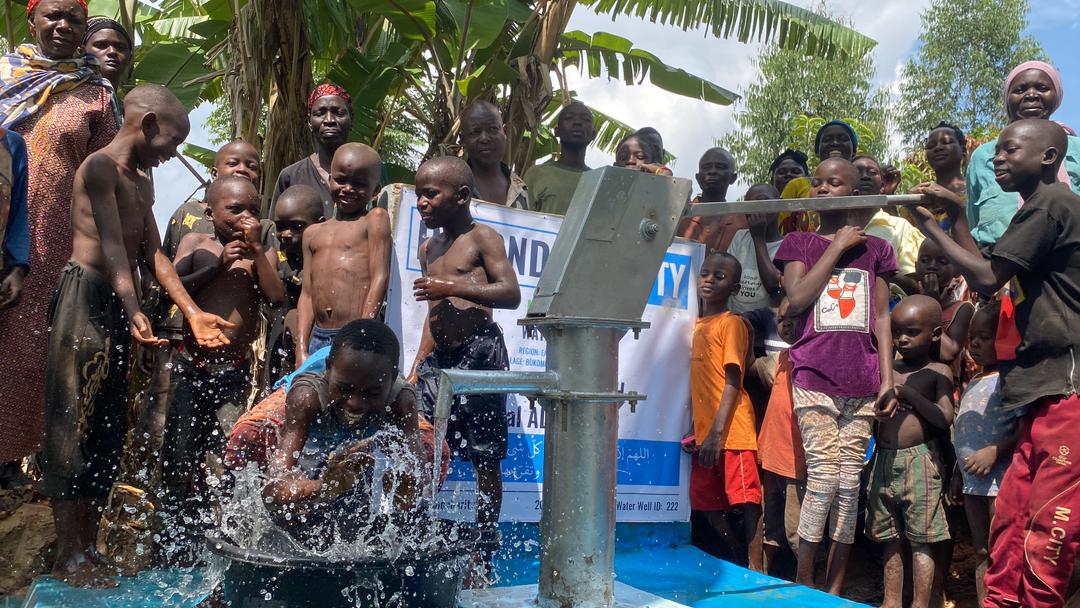
Builds water wells in Asia and Africa, providing long-term, sustainable access to safe and clean water for communities.
[Standardized: $5,000 USD CapEx / 350 people benchmark per Sphere standard; 15-year lifespan] Complete drilled well package. Standardized from promotional 1,000-person claim to 350-person single handpump hydraulic capacity (15 L/min at 20L/person/day). Annualized cost: $0.95/person/year.
Give Clean Water (Fiji)
Brings sustainable clean water solutions to homes in Fiji by training locals to install and maintain Sawyer water filters. $60 sponsors a family.
Focuses heavily on follow-up and maintenance, reporting 98.3% of filters still working after installation. Tax-exempt 501(c)(3) in the USA.
The Bucket Ministry
Equips underserved families in informal settlements and rural villages with Sawyer PointONE 0.1-micron bucket filters, anti-parasitic treatment, and 3 personal follow-up visits. $50 sponsors a family.
High transparency model with personal donor tracking dashboards and GPS-mapped filter follow-ups. Operates in Kibera slum (Kenya), Mexico, Brazil, Vietnam, and Uganda. Tax-exempt 501(c)(3) in the USA.
The Charis Project (Shade Tree Foundation)
Provides household water filtration systems and school clean water infrastructure to vulnerable Burmese refugee and migrant communities along the Thai-Myanmar border.
Direct on-the-ground team operating in Mae Sot along the Moei River. Registered US 501(c)(3) and recognized Thai Foundation. Eliminates pass-through intermediaries.
Hope for Haiti (Clean Water & Buckets of Hope)
Deploys Sawyer PointONE household bucket filtration systems and community water purification infrastructure across schools, clinics, and rural families in southern Haiti.
Operating continuously for 35+ years in Les Cayes (southern Haiti). Charity Navigator 4-Star (100% score) and Candid Platinum Level. Direct field logistics avoiding capital disruptions. US 501(c)(3) (EIN 59-3564329).
Community Transformation Trust (CTT) - VIP Latrines & Sanitation (Kasese, Uganda)
Partners with GHNI to fund shared Ventilated Improved Pit (VIP) latrines in rural isolated villages in Kasese, Uganda, led by local TCD (Transformational Community Development) graduates.
Sanitation & disease barrier intervention ($250 NZD / ~$150 USD). Co-funded with local beneficiary families, covering essential concrete slabs and ventilation pipes for 2 to 4 neighboring households (~15 people, giving $10.00 USD/person). Annualized cost is $1.00/person/year over 10 years. 100% tax-deductible in New Zealand (CC59530).
Community Transformation Trust (CTT) - Village Drill Boreholes (West & East Africa)
Funds portable, low-cost WHOlives Village Drill hybrid rigs and complete village borehole installations for remote, hard-to-reach communities in Liberia, Sierra Leone, and Kenya.
Turnkey community borehole well ($9,000 NZD / ~$5,400 USD, or $50 NZD / ~$30 USD per family share). Standardized to the Sphere 350-person hydraulic capacity benchmark ($15.43 USD/person). Annualized cost is $1.03/person/year over a 15-year engineering lifespan. 100% tax-deductible in New Zealand (CC59530).
Sand Dams in Somaliland (Concern Worldwide)
Sand dams and sub-surface dams in Huluuq, Somaliland. The rubble stone and SSD cost ~69 USD/m3. Average capital cost $31 per person with 30-year design life. Maintenance costs $0.7-1.2 per person/year.
[Original Cost: USD 32,120 to 67,397 per dam (USD)] Very cost-effective: $31 per person capital cost, less than $1 per person per year. Design life 30 years. Community contribution helped ownership.
Community Sand Dams in Kenya (SASOL/Sand Dam Construction)
Construction of sand dams in semi-arid Kenya (Kitui, Machakos, Kajiado) by SASOL and other organizations. Each dam costs ~$9,000 for a well and 30m long dam, serving 210-350 people. Community contributes 30-35% labor. Dams provide year-round water access, recharge groundwater, and support agriculture.
[Original Cost: USD 9,000 for a well and sand dam (USD)] Very cost-effective: $31 per person capital cost, with lifespan of 30+ years and low maintenance ($0.7-1.2 per person/year). Water access significantly improves livelihoods.
For Safe Water, Deliver Chlorine at its Source
Community-installed chlorine dispensers placed directly at water sources with local paid promoters to encourage use, evaluated by Innovations for Poverty Action and scaled across East Africa.
[Original Cost: $1.05 per person per year (USD)] At-scale unit cost is about $1.05 per person per year including hardware, chlorine refills, management, and training; trials showed a 53-percentage-point increase in treatment versus retail chlorine, though later monitoring suggests real-world adoption can fall short of trial rates.
Water For Life Charity Deep Well (Kenya)
Install a typical 250-foot deep well in Kenya serving an average of 750 people per well, costing about $12,000 total. Provides clean, sustainable drinking water to communities.
[Original Cost: $12,000 total per well serving ~750 people (USD)] Cost per person is approx. $16, with a well lifespan of 15 years, annual cost under $1.07, very effective.
Wine To Water South Africa (PureMadi Ceramic Filter Factory)
Operates the Hammanskraal ceramic filter production facility (originally founded by the University of Virginia as PureMadi) to supply clean water and cholera prevention across South African informal settlements experiencing municipal water shedding.
Produces silver-impregnated ceramic filters in Hammanskraal, Gauteng, providing household filtration for families facing routine municipal water outages and cholera risk. Each filter produces 20-30 L/day for 5-6 people over 5 years. Total hardware cost ~$30 USD ($5.45/person setup; $1.09/person/yr).
Tunsai (Rabbit) Ceramic Water Purifier
Silver-enhanced ceramic pot filter manufactured by Hydrologic in Cambodia, sold mainly via NGO channels. Removes bacteria by 99.99%.
[Original Cost: $13.50 per unit (serves ~4 people) (USD)] Low retail price of $13.50 per unit, with average lifespan of 2 years for the filter element.
WaterAid
Builds sustainable water systems (piped systems, wells) in rural and urban communities across more than 30 countries. Focuses on long-term maintenance and local partnerships.
Exceptional sustainability rating. Endorsed by the Australian government with full DGR status. Ensures deep community ownership and local technical capacity.
Wine To Water Dominican Republic (Ceramic Pot Filter Factory & RWH)
Operates a dedicated ceramic filter factory in Higuerito, Moca, Dominican Republic, producing clay, sawdust, and colloidal silver pot filters and installing rooftop rainwater harvesting systems.
Community-operated facility manufactures durable pot filters delivering 20-30 liters/day for households over a 5-year lifespan. Replaces contaminated surface water and costly commercial bottled water. Complete filter unit with food-grade receptacle costs ~$30 USD serving 5 people ($6.00/person; $1.20/person/year).
Community Transformation Trust (CTT) - Household Water Filters (Cairo Refugees)
Partners with GHNI to provide and install point-of-use household water filters for vulnerable refugee families living in high-density informal settlements in Cairo, Egypt. Over 450 filters funded.
Direct household point-of-use intervention ($120 NZD / ~$72 USD). Installed directly at the family kitchen tap, serving an average of 6 family members ($12.00 USD/person). Annualized cost is $1.20/person/year over a 10-year filter lifespan. 100% tax-deductible in New Zealand (CC59530).
Wine To Water (Water4Schools Integrated WASH & Latrines)
Equips primary and secondary schools across Tanzania, Nepal, Colombia, and the Dominican Republic with dedicated boreholes/rainwater harvesting, multi-tap handwashing stations, gender-segregated latrines, and 9-month WASH & menstrual hygiene education.
Turnkey school WASH package ($12,000 USD) serving an average of 600 students and staff ($20.00/student setup). Over a 15-year facility lifespan, cost is $1.33/student/year. Reduces absenteeism, protects adolescent girls through menstrual health education, and prevents waterborne outbreaks.
Water4 Community-Driven Water Projects
Water4 uses a sustainable, local approach to end the water crisis. They train local entrepreneurs to build and maintain water systems, completed 9,518 projects serving over 2.1 million people.
Focuses on exit strategy and local ownership rather than ongoing charity. Strong emphasis on business models and hygiene education.
EA NZ - GiveWell Water Quality Interventions
Supports GiveWell's top-rated water charities like Evidence Action's Dispensers for Safe Water. Donations made through EA NZ are tax-deductible in New Zealand.
Highly effective, thoroughly vetted by GiveWell. EA NZ provides a 33% tax-rebate route for New Zealand donors.
Clean Water Wells (Water For Life Charity)
Water For Life Charity drills wells in developing countries to provide clean water to communities.
[Standardized: $8,000 USD CapEx / 350 people benchmark per Sphere standard; 15-year lifespan] Drilled community borehole. Standardized from 800-person claim to 350-person single pump hydraulic limit. Annualized cost: $1.52/person/year.
Water Wells For Africa - Rural Water Wells
Installs durable water wells in remote African villages; 98% continue functioning after 20 years.
[Standardized: $9,000 USD CapEx / 350 people benchmark per Sphere standard; 15-year lifespan] Deep drilled borehole with hand pump. Standardized from 500-person claim to 350-person sustainable hydraulic capacity. Annualized cost: $1.71/person/year.
Penny Appeal Canada Deep Well (Pakistan)
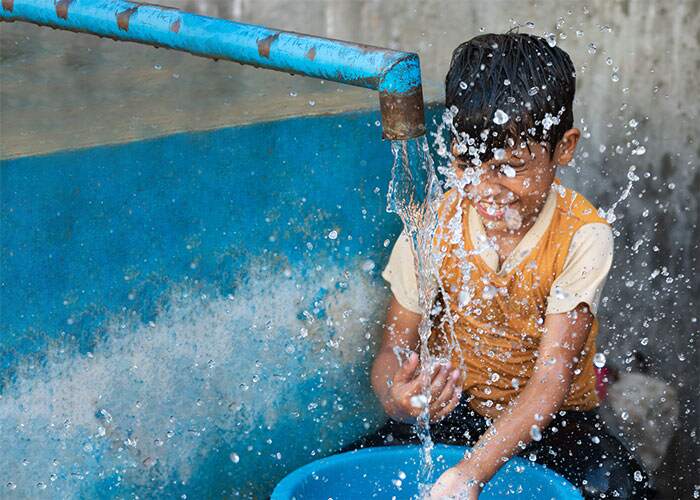
Build a deep well in Pakistan to provide clean water access to a community. Donation includes plaque with name. Cost not specified per person but total well cost typical for region.
[Standardized: $2,500 CAD (~$1.8k USD) CapEx / 150 people neighborhood cluster; 7-year tube well lifespan] Standardized from 1,000-person claim to realistic South Asian alluvial tube well cluster scale (150 people). Annualized cost: $1.71/person/year.
OHorizons Concrete BioSand Filter
Concrete biosand filters distributed by OHorizons in Ecuador, Mali, and Bangladesh. Cost $15-65 per filter, lifespan over 25 years, effective pathogen removal.
[Original Cost: $15-65 (USD)] Extremely cost-effective at under $2 per person per year. Durable and sustainable, with minimal maintenance.
GiveWell - Chlorination Programs
Funds water chlorination programs in low- and middle-income countries. Highly cost-effective, with over $125 million granted since 2017. Reduces waterborne disease.
Extremely low-cost intervention. The $2 per person annual cost makes it among the most cost-effective water charities.
One ATTA Time
Partners with local community leaders to provide Sawyer PointONE hollow-fiber water filter kits to vulnerable families, with systematic health and maintenance follow-up.
Focuses on long-term relationship-based distribution in high-need rural pockets of El Salvador, Vietnam, Colombia, and Uganda. Tax-exempt 501(c)(3) in the USA.
Yayasan Kopernik
Equips underserved families across eastern Indonesia with household ceramic and membrane water filtration systems distributed through the Ibu Inspirasi women micro-entrepreneur network.
Headquartered in Ubud, Bali with deep field operations in Sumba, Flores, and West Timor. High transparency with US 501(c)(3) tax status (GuideStar Gold, EIN 27-0962978).
SurfAid International
Engineers gravity water supply networks, rainwater storage, and community health centers in isolated Indonesian surf-destination islands (Mentawai, Nias, Sumba, Sumbawa).
Founded by a New Zealand physician. Exceptional multi-country tax deductibility: Australia (DGR tax deductible), New Zealand, USA 501(c)(3), and UK. High community ownership and village water committees.
World Vision Water
Provides clean water access to a new person every ten seconds through wells, piped systems, and hygiene programs in developing countries.
Large-scale reach, but organizational overhead may be higher.
Splash
Brings clean water and safe sanitation to children in urban poverty across eight countries, targeting schools and urban areas.
Innovative urban focus, but less rural reach.
Decentralized Water Purification Centers
Smaller affordable water purification plants in India using a six-step filtration process (sand filter, charcoal filter, UV disinfection, micron filters). Serves more than 5 million people daily.
[Original Cost: 6 rupees (10 cents) per 20 liters (INR)] Costs about 6 rupees (10 cents) for 20 liters of clean water, making it very affordable per person.
Blood: Water Mission
Launched first project in 2005, focused on clean water and sanitation in African communities with a holistic, community-driven approach.
Niche but impactful, smaller scale.
Potters for Peace (PFP) Ceramic Water Filter (NGO Channel)
Locally manufactured PFP-design ceramic filters for household water treatment, sold at $10 per filter to NGOs who then distribute them in developing countries. Proven to reduce diarrheal disease by 60-70%.
[Original Cost: $10 per filter (USD)] Very low cost per filter and high health impact, but requires established local production capacity and NGO distribution. Filters last about 3 years, making annual cost very low.
Resource Development International Cambodia Ceramic Water Filter
RDIC produces and distributes low-cost ceramic water filters for $10 using local materials and manufacturing, serving communities in Cambodia.
[Original Cost: $10 USD per system (USD)] Very low cost per unit; provides safe water to rural communities in Cambodia.
The Water Project: Hand-Pumped Wells in Africa
Charity intervention that drills shallow hand-pumped wells in Africa. A donor contribution of $50 provides clean water for one person, with each well serving approximately 350 people.
[Original Cost: $50 provides clean water for one person (USD)] Low donor entry point with clear per-person cost. Durable infrastructure model using shallow-depth drill rigs and hand pumps. Annualized cost is highly cost-effective over a multi-year lifespan.
Safe Water Network iJal Station in India
Safe Water Network supports rural entrepreneurs to set up iJal water ATMs in India, providing clean water at Rs 5 ($0.07) for 20 liters, with an initial seed investment of about $2,400 per station.
[Original Cost: Rs 5 ($0.07) per 20 liters (USD)] Entrepreneurs earn $180-$240 per month and serve about 200 customers daily, offering an affordable and sustainable water solution while creating local jobs.
Sarvajal Water ATM in India
Sarvajal operates solar-powered water ATMs and franchised water stations in rural and peri-urban India, providing clean drinking water at $0.005 per liter via a card-operated vending system.
[Original Cost: $0.005 per liter (USD)] The model combines technology with local entrepreneurship, reducing waterborne disease costs and empowering women entrepreneurs. Water is priced at Rs 5 ($0.07) per 20 liters, significantly cheaper than alternatives.
Amazon Frontlines (Ceibo Alliance / ClearWater)
Constructs large-scale rooftop rainwater harvesting and filtration systems for indigenous Cofán, Siona, Secoya, and Waorani communities facing petroleum and chemical river contamination in the Ecuadorian Amazon.
Indigenous-led alliance. Winner of the UN Equator Prize and Goldman Environmental Prize. Built over 1,500 systems to guarantee oil-free freshwater. US 501(c)(3) tax-exempt (EIN 45-3645396).
Wine To Water (Amazon Indigenous Rainwater Harvesting Systems)
Installs engineered rooftop rainwater collection systems with heavy-duty guttering, elevated food-grade storage tanks, and DROP membrane filters for remote indigenous riverine communities along the Amazon basin in Colombia, Brazil, and Peru.
Replaces heavily silted, pathogen-laden Amazon river water with clean, gravity-fed rainwater storage. Turnkey system costs ~$1,800 USD serving an extended family or communal cluster of 20 people ($90.00/person setup). Over a 10-year lifespan, annualized cost is $9.00/person/year.
Wine To Water (Rapid Disaster Response & Emergency Water)
Rapidly deploys emergency DROP filter kits, mobile ultrafiltration units, water trucking, and hygiene packs to crisis zones impacted by hurricanes, floods, earthquakes, and armed conflict.
Direct first-responder WASH deployment. Over FY24/25, served 193,012 people across 10 countries (including Hurricane Helene in WNC, front-line cities in Ukraine, and earthquakes in Turkey/Syria and Nepal). Turnkey emergency support averages $10 USD per person served for rapid 1-year crisis intervention.
ReliefAid Gaza Emergency Water Distribution
Delivering safe drinking water to families in displacement camps across Gaza. Sourced from local boreholes and treated using operational desalination plants to ensure distribution is independent of border crossings.
Highly cost-effective emergency intervention in a major conflict zone, bypassing border dependency by sourcing water from active boreholes treated locally. Extremely high immediate survival impact.
Sand Dam Construction by Excellent Development
Community-led sand dam construction in drylands, storing enough water for 1,000 people for life with low cost per 1,000 liters.
[Original Cost: midpoint $8,000 per dam serving ~1,000 people = $8 per person setup (USD)] Dam cost range is $6,000-$10,000; midpoint $8,000 divided by 1,000 people gives $8 per person. Annual water cost per 1,000 liters is $0.40-$0.80. With a 20-year lifespan the annualized cost is $0.40/person/year. Community provides ~40% of costs through labour.
Sand Dam Construction by Africa Sand Dam Foundation
Construction of sand dams in semi-arid regions of Kenya to provide clean water storage in sand reservoirs, with community contribution of labor and materials.
[Original Cost: €8,500 per dam serving 1,000 people (EUR)] Cost per dam is about €8,500 (USD 9,350), serving ~1,000 people with lifespan of 20-50 years and negligible maintenance.
Sand Dam Construction in Kenya (Makueni County average)
Average cost sand dam in Makueni County, Kenya, providing water to communities.
[Original Cost: KES 1.5 million (USD 10,000) per dam serving ~1,000 people (KES)] Average cost KES 1.5 million (USD 10,000) per dam; serves numerous households with long lifespan.
Hydraid BioSand Filter
A lightweight plastic biosand filter for household use, retail price $75, serves 8-10 people, lifespan over 10 years, distributed through NGOs in developing countries.
[Original Cost: $75.00 (USD)] Higher upfront cost per person but still under $10 per person per year. Suitable for areas where concrete filters are not feasible.
VF100 Water Filter
A $50 donation provides a VF100 water filter to a family in a developing country, capable of purifying over 100,000 gallons of water and removing 99.9999% of diseases.
[Original Cost: $50 per filter (USD)] Very cost-effective, low cost per person per year for a simple filter technology. Tax-deductible in the US.
Biosand Filter
A household water filter made of concrete or plastic with sand and gravel layers that removes pathogens through physical straining and a biofilm. No consumables needed, low operating costs.
[Original Cost: $10 per filter (USD)] Cost varies locally; in the Kenya commercial model filters sold for $10 each including profit. Effective in many developing countries.
Charity: Water
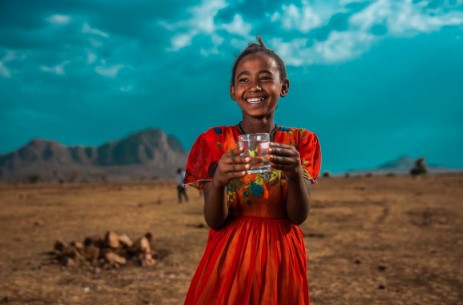
Sponsor a water project (well, piped system, rainwater harvesting) for an entire community, school, or health clinic with a gift of £8,500 or more. 100% of donations go directly to water solutions.
[Original Cost: $250 per filter serving 5 people = $50 per person setup cost (USD)] Each filter serves approximately 5 people at a per-unit cost of $250. Over 114,000 filters have been funded since 2009, reaching 441,180 beneficiaries cumulatively. Families contribute time and labor, keeping costs low.
The Water Project - Wells & Rainwater Harvesting in Africa
Builds new wells, fixes broken ones, installs sand dams, rainwater collection, and spring protection in sub-Saharan Africa. Partners with local leaders.
Focuses on rural communities, but scale is smaller.
Splash - Urban Water and Sanitation for Children
Splash provides clean water and safe sanitation to children in urban poverty settings, focusing on schools and institutions. Serves in 8 countries, targeting urban slum areas rather than rural villages. Installs water filtration and handwashing stations.
Effective urban focus with institutional delivery (schools). High impact on children's health. Needs ongoing maintenance and supplies.
Sand Dam Construction in Somaliland (Reinforced Concrete/Hybrid)
Construction of reinforced concrete sand dams in Somaliland. Average capital cost is 31 USD per person for a minimum 30-year design life, with annual maintenance costs of 0.7-1.2 USD per person per year.
[Original Cost: 31 USD per capita (USD)] Cost-effective water supply solution for drylands with long lifespan; community maintenance capacity is key but can be a limiting factor.
Sand Dam Construction in Kenya/Ethiopia (NGO Cost-Sharing Model)
NGO-supported sand dam construction in drylands of Kenya and Ethiopia using a cost-sharing model (community provides 44-50% of costs). Total construction cost is 6,000-8,500 EUR per dam (6,600-9,350 USD). Lifespan 20-50 years, no annual maintenance costs.
[Original Cost: 6,000 to 10,000 EUR per dam (EUR)] Sand dams have low maintenance and long lifespan; however, benefits are not equally shared, with users closest to the dam gaining most.
SAPA WASH Program - Water Well Drilling
The Sudanese American Physicians Association drills standard and deep borehole wells across Africa through its WASH Program. Standard boreholes or hand-dug wells range from $5,000 to $15,000, while deep wells up to 900 feet exceed $20,000. Projects include forming village water committees for maintenance.
[Original Cost: $5,000–$15,000 per borehole; midpoint ~$10,000 for 800 people (USD)] Midpoint well cost of $10,000 divided by 800 community members gives $12.50 per person setup cost. Over a 20-year lifespan the annualized cost is $0.625/person/year. Community maintenance training adds $500–$1,000 per project but is critical for longevity. Without maintenance, 30–50% of wells fail within five years.
Water4 - Well Drilling and Community Training
Water4 completes water projects using local entrepreneurs and provides WASH (Water, Sanitation, Hygiene) training. They focus on sustainable, locally-owned solutions.
Water4's approach builds local ownership, which can improve long-term sustainability.
Drop in the Bucket - Uganda Borehole Wells
Drills 50-meter deep borehole wells in Uganda equipped with India Mk II hand pumps. A typical well costs approximately $7,500. The charity mobilizes to drill multiple wells in a region simultaneously to share transport costs and improve efficiency.
[Original Cost: ~$7,500 per borehole serving ~350 people (USD)] A typical 50-metre borehole fitted with an India Mk II hand pump costs approximately $7,500 and serves around 350 people, giving a setup cost of $21.43 per person. Over a 15-year lifespan the annualized cost is $1.43/person/year. Drilling multiple wells per mobilization (target ≥10) significantly reduces per-well transport costs. Each project includes community mobilization, sanitation and hygiene training, and a monitoring plan.
Wells of Life - Well Drilling in Uganda
Provides potable water by drilling wells in Uganda. Collaborates with local communities and drilling teams.
Narrow geographic focus, but measurable impact.
Water Wells for Villages (GAiN Australia)
Global Aid Network (GAiN) Australia builds water wells in villages in Benin, Togo, and Tanzania, providing safe, lasting access to clean water along with hygiene training and community development.
[Standardized: $15,000 AUD (~$10k USD) CapEx / 350 people benchmark per Sphere standard; 15-year lifespan] Complete drilled well. Standardized from promotional 1,000-person village claim to 350-person sustainable handpump capacity. Annualized cost: $1.90/person/year. Tax-deductible in Australia (DGR).
Ceramic Water Filter Project (Village Volunteers)
Distributes locally-made ceramic water filters that remove 99.88% of pathogens to rural communities in Western Kenya. Filters last 3 years.
[Original Cost: $25 per filter (serves 4 people typically) (USD)] Very cost-effective at $25 per filter for a family, with a 3-year lifespan.
Wells of Life Well Drilling in Uganda
Drills wells in Uganda to provide clean water to rural communities.
Specific focus on Uganda; wells have high functionality rate with local collaboration.
CloudFisher Fog Collector (WaterFoundation)
The CloudFisher is a durable fog collector that withstands winds up to 120 km/h, requires no energy, and provides clean water. Deployed in Morocco, Tanzania, Bolivia, Peru, Eritrea, and other countries.
[Original Cost: Varies; not specified per unit, but typical $1,500 per unit (EUR)] The project in Morocco uses 31 CloudFisher units with 1,686 m² of net area serving 1,300 residents. Cost per person per year is approximately $2.88 (assuming $0.50 per liter per day capital cost amortized over 10 years).
The Water Project Community Well in Africa
Build a clean water well in Africa for $50 per person. Projects in Kenya, Sierra Leone, Uganda. 100% of donations go to projects.
[Original Cost: $50 per person (USD)] Cost is $50 per person for well construction. Lifespan 15 years gives annual cost $3.33. Very high impact.
Water Tank for Yemen
Provide a water tank to a family in Yemen for storing clean water. Cost: £80 per family.
[Original Cost: £80 per tank (GBP)] Targeted to a specific crisis region. Cost per person is low assuming a family of 5.
GiveWell Water Quality Interventions
Grants for water chlorination programs in low- and middle-income countries, with over $125 million provided since 2017.
Highly cost-effective and evidence-based, but large-scale and not direct individual donation routing.
Ecofiltro Ceramic Water Filter (Guatemala)
Ecofiltro sells ceramic water filters in Guatemala: urban selling subsidizes rural distribution. Over 400,000 rural families reached. Filters provide safe drinking water at very low cost.
[Original Cost: $20 per unit (USD)] Cross-subsidy model enables wide rural access; open-source technology replicated in 39 countries.
Potters for Peace Ceramic Water Filter Program
Potters for Peace provides technical assistance to set up local factories producing low-cost ceramic water filters that eliminate approximately 99.88% of waterborne disease agents. Filters cost $15-$25 per unit and replacement filters cost $4-$6.
[Original Cost: $15 to $25 per unit (USD)] Very cost-effective with long lifespan; local production reduces costs and creates jobs.

Water.org
Water.org provides small, affordable loans to families for water and sanitation connections. Co-founded by Matt Damon, the organization empowers households to finance their own water solutions, reaching millions with sustainable, market-based approach. Operates globally.
Microfinance model leverages local markets and can scale with donor funding.
Water4 - Well Drilling & WASH Training
Water4 provides safe water through drilled wells and WASH training. As of 2025, completed 9,518 water projects and provided safe water to over 2.1 million people. Uses a sustainable local business model and emphasizes hygiene education and community ownership.
Sustainable model with local entrepreneurship. Combines infrastructure with behavior change. Projects in several African countries.
AusRelief - Build a Water Well (Shallow Tube Well Package)
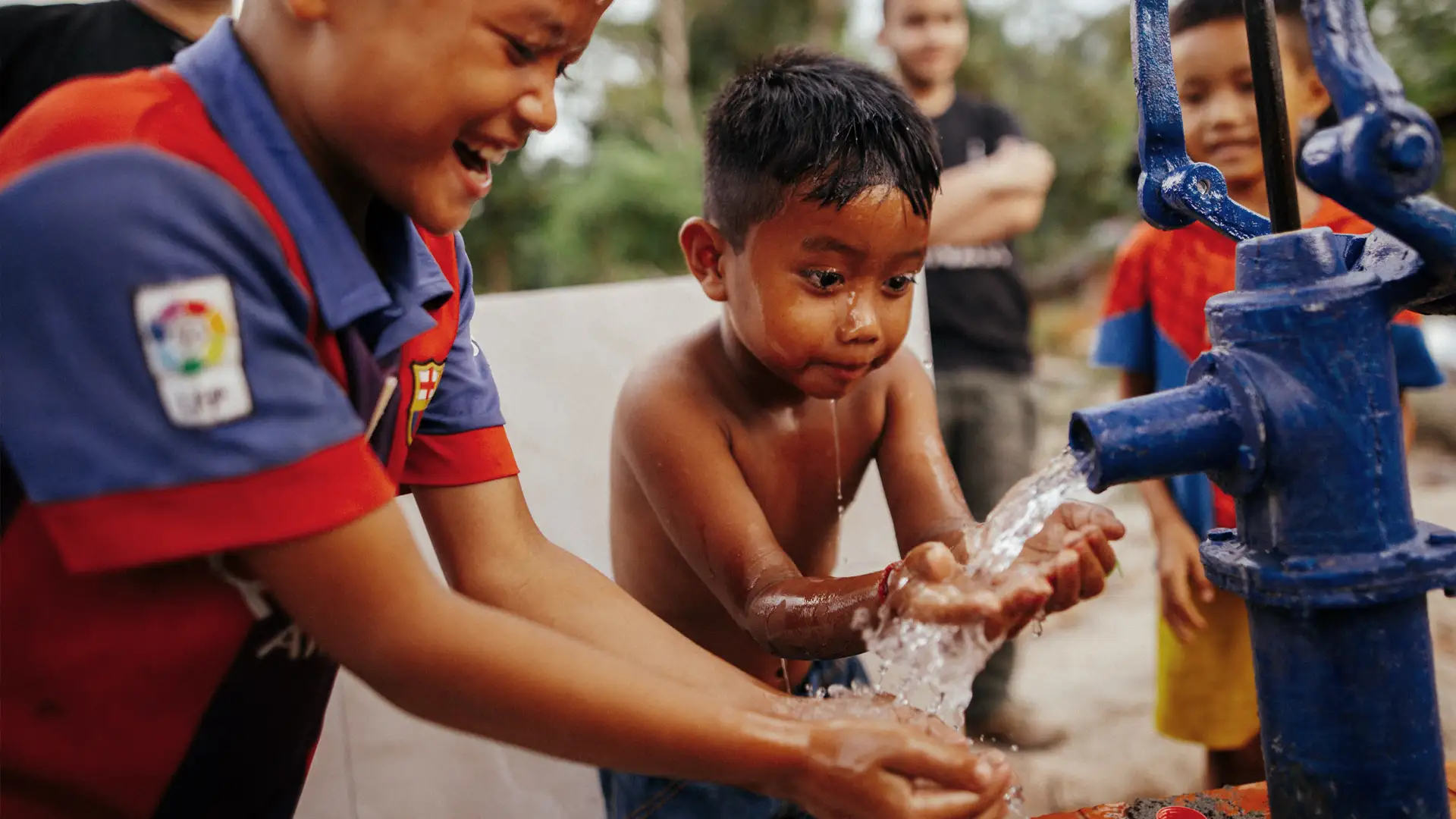
Funds low-cost tube wells in communities in need. ⚠️ Plausibility Warning: Stated $1,000 AUD (~$670 USD) unit cost is typical of shallow manual tube wells in soft alluvial plains (e.g. South Asia) or co-funding sponsorships, far below the $3,500–$15,000 standard for sanitary deep community boreholes. Highly vulnerable to seasonal dry-outs and shallow aquifer contamination.
[Original Cost: $1,000 AUD / well] ⚠️ Plausibility Flag: $1,000 AUD is an unverified nominal rate for a full well. Real community boreholes with casing, sanitary bentonite seals, and pumps cost $3,500–$12,000 USD. If genuine, this is a shallow hand-jetted tube well serving a single family compound (~25 people, giving ~$27 USD/person) with a short 3–5 year operational life, rather than a 350-person community asset.
Chalice Canada Water Storage Tank
Provide a water storage tank for a community in need, enabling clean water access. Minimum donation $50 CAD.
[Original Cost: $50 CAD per tank (CAD)] Cost per person not specified; tank is part of a larger system. Estimated lifespan 5 years, but unclear. Assumed community use.
UNICEF WASH Programs
UNICEF provides safe water, sanitation, and hygiene services in over 100 countries, reaching vulnerable communities with emergency water delivery, handwashing stations, and latrines.
Large-scale UN agency with massive reach. During COVID-19 reached nearly 74 million people. Proven effectiveness in both emergency and development contexts.
Standardized WASH Beneficiary & Lifespan Methodology
To prevent distorted cost-per-person rankings caused by exaggerated charity marketing claims (e.g., claiming 1,000 people on a single handpump), all interventions are standardized to empirical engineering realities. Single manual handpumps are benchmarked to the Sphere Humanitarian Standard of 350 people (based on 12–15 L/min continuous hydraulic limits at 20L/person/day) and 15-year lifespans. Solar-powered piped distribution schemes with elevated storage tanks legitimately serve 1,000+ people.